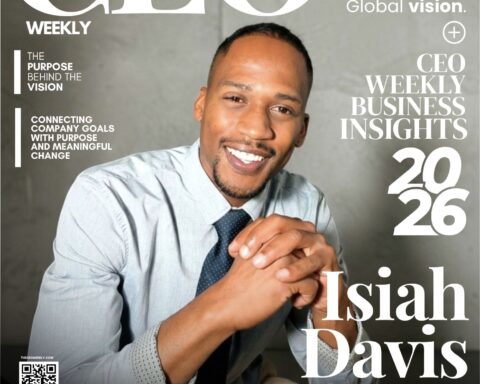
Why leaders need a trusted, agenda-free ally to challenge blind spots, prevent decision fatigue, and strengthen executive clarity
What Do You Do When You’re the One Everyone Expects to Have the Answers?
Picture this: you’re in the corner office—city views, executive assistant, a calendar that looks like a Jenga tower—and facing a high-stakes decision that could shape your company’s future. Your CFO wants data. Your board wants results. Your shareholders want reassurance. Your team wants direction. And your spouse? Probably just wants you home in time for dinner.
So, who do you turn to? Your mom? A golf buddy? Your accountability group meeting in eight weeks? The dusty Magic 8-ball on your desk?
Exactly. No one.
Because here’s the irony of climbing the corporate ladder: the higher you go, the fewer people you can confide in. The expectations intensify, but the support narrows. Your team looks to you for certainty. Your board wants decisive strategy, not uncertainty. Fellow CEOs are busy navigating their own storms—or they’re your direct competitors.
The Echo Chamber at the Top
This is more than loneliness. This is leadership in an echo chamber—where feedback is filtered, truths are softened, and everyone around you either wants something or is afraid to rock the boat.
How often do you get raw, unfiltered truth from your team or peers? When was the last time someone asked you a tough question without an agenda?
What Coaching Really Offers
Let’s be clear: coaching isn’t therapy. It’s not consulting. It’s not a motivational speech or a workshop on KPIs.
Great coaching is about sharper thinking. It’s about clarity, perspective, and progression. A coach doesn’t tell you what to do—they help you uncover what you already know, ask the hard questions others won’t, and hold a mirror to your blind spots.
Unlike employees, consultants, or advisors, a coach has no horse in the race and no political stake. They’re the one person whose only interest is helping you think more clearly, more strategically, and more courageously.
Yes, You Have Blind Spots
We all do. But as a senior leader, yours are more dangerous because fewer people will tell you about them. A coach is the person who helps you see the patterns you’re stuck in, the assumptions you don’t know you’re making, and the decisions you’re making with half the data.
The truth is, you are making decisions with incomplete information. We all are. But you’re also making them in an environment where you’re expected to never appear uncertain. That’s exhausting.
Leadership Fatigue Is Real—and Costly
Decision fatigue at the top isn’t just about choosing between two strategies. It’s about carrying the weight of people’s jobs, investments, morale, and futures. Meanwhile, you’re supposed to project calm, clarity, and vision.
You used to be the expert. Now you’re managing experts solving problems you’ve never seen before. Welcome to the identity crisis nobody warned you about.
Add in the constant “always-on” mental state—every conversation, every word, every outcome carries weight—and you start to see why burnout isn’t just a personal problem. It’s an executive risk.
The Price of Going It Alone
Let’s talk math: good decisions compound into better results. Bad ones? They’re black holes—consuming time, morale, talent, and trust.
One flawed judgment call at your level doesn’t just lose a deal—it can derail a quarter, a culture, even a career. That’s why coaching is not a luxury. It’s a strategic multiplier.
An objective thinking partner can be the most valuable resource you never budgeted for—until now.
Want to Lead Smarter? Start Asking for Help.
Elite athletes have coaches. So do elite leaders. Why? Because the best know they’re always learning. They know that wisdom isn’t about always having the answers—it’s about asking better questions.
In today’s complex, volatile world, your biggest strength as a leader may be your willingness to say: “I don’t have this all figured out. Let’s think it through.”
So—what are you wrestling with right now that could benefit from a genuinely smart, agenda-free thinking partner?
You don’t have to lead alone. And frankly, you shouldn’t.